- C++ 96.7%
- C 2.5%
- Python 0.6%
- Shell 0.1%
| .github/workflows | ||
| docs | ||
| hardware | ||
| res | ||
| software | ||
| .gitignore | ||
| .gitmodules | ||
| API-notes.md | ||
| README-pld.md | ||
| README.md | ||
| TODO.md | ||



Phazerville Suite - an active o_C firmware fork
More Videos...
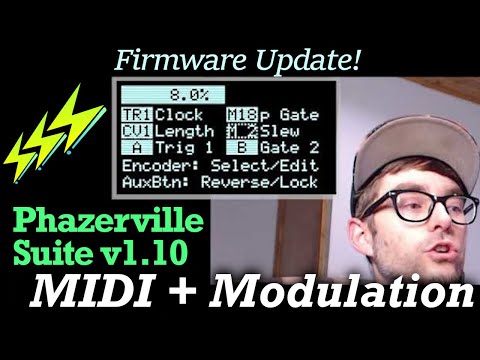
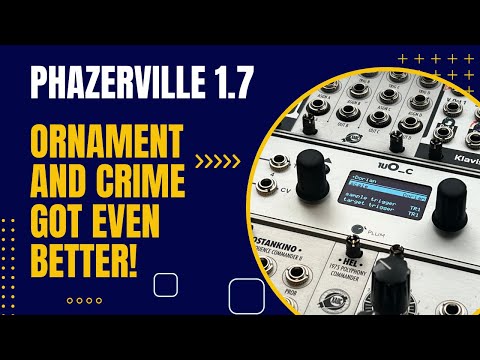
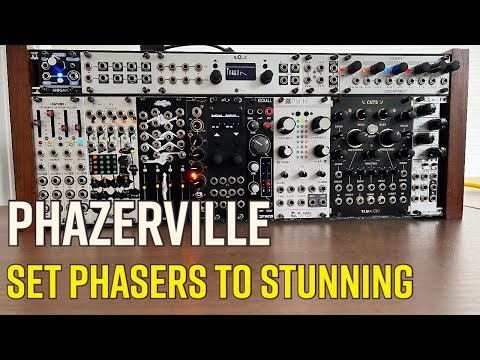

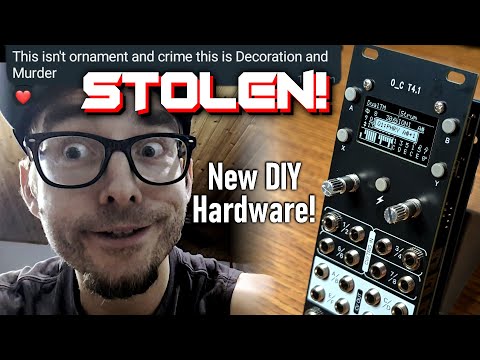
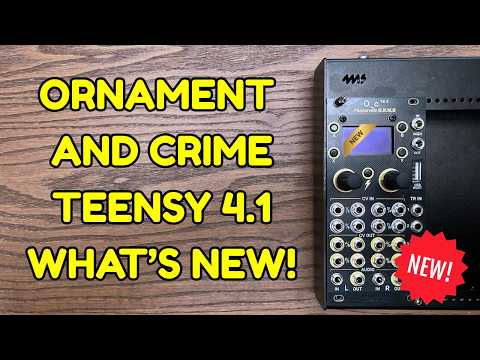
Watch some video overviews (above) or check the project website for more info, including commercial product links.
Download a firmware Release or Request a Custom Build (for Teensy 3.2).
Grab Paul's Screen Capture program to view the screen on a PC via USB.
Hardware Info
There are two distinct microcontrollers aka MCU's (and each has variants) and also two distinct hardware shields, and there's some overlap.
Shields:
- o_C - based on the original "ornament & crime" hardware design by mxmxmx
- 4ch ADC / 4ch DAC
- DAC and OLED share a SPI bus
- 8HP uO_c by jakplugg - https://github.com/jakplugg/uO_c
- original 14HP panels & gerbers are in the
hardwaredirectory
- O.R.N.8 aka "O_C T4.1" - https://github.com/PaulStoffregen/O_C_T41
- 8ch ADC / 8ch DAC / 2ch Audio In + 2ch Audio Out
- SPI0 dedicated for DAC
- SPI1 dedicated for OLED
- Serial MIDI In + Out / USB Host MIDI
- designed by Paul, derived from original
MCUs:
- Teensy 3.2 - compatible with O_C
- Teensy 4.0 - compatible with O_C
- Teensy 4.1 - compatible with O_C or ORN8
Thus, the 4.x series are pin-compatible drop-in replacements for the old existing O_C hardware. They bring increased CPU, RAM, and Flash capacity, while working with the existing limitations of the design (sharing a SPI bus). Although the 4.1 can technically work with O_C (using the T40 firmware), the form factor of the 4.0 is more fitting, especially on the 8HP model.
The T41 firmware builds primarily target the new O.R.N.8 hardware shield, with new features that take advantage of it (lots of Audio DSP stuff), but many CV and MIDI features will still show up in the T40 builds for old hardware. T32 support is deprecated, but will remain available for Custom Builds, receiving occasional Applet updates.
Stolen Ornaments
Using Benisphere as a starting point, this project takes the Hemisphere ecosystem in new directions, with many new applets and enhancements to existing ones. An effort has been made to collect all the bleeding-edge features from other developers, with the goal of cramming as much functionality and flexibility into the nifty dual-applet design as possible!
I've also included all of the stock O&C firmware apps plus a few others, but they don't all fit in one .hex. As a courtesy, I provide pre-built .hex files with a selection of Apps in my Releases. You can also tell a robot to make a Custom Build for you... (T3.2 only)
...or clone the repo, customize the platformio.ini file, and build it yourself! ;-)
I think the beauty of this module is the fact that it's relatively easy to modify and build the source code to reprogram it. You are free to customize the firmware to work in your system, similar to how you've no doubt already selected a custom set of physical modules.
How To Hack It
Option 1: Platform IO
This firmware fork is primarily built using Platform IO, a Python-based build toolchain, available as either a standalone CLI or a full-featured IDE, as well as a plugin for VSCode and other existing IDEs. Follow one of those links to get that set up first.
The PlatformIO project for the source code lives within the software/ directory. From there, you can Build the desired configuration and Upload via USB to your module. In the terminal, I type:
pio run -e T41_audio -t upload
Or, for older Teensy 3.2 modules:
pio run -e T32 -t upload
Or use T40 for Teensy 4.0. Have a look inside platformio.ini for alternative build environment configurations and app flags.
Pro-tip: If you decide to fork the project, and enable GitHub Actions on your own repo, GitHub will build the files for you... ;)
T32 custom build size notes
This fork builds paired Teensy 3.2 firmware with software/build_custom_pair.sh and .github/workflows/firmware.yml. Each target gets a full-Hemisphere build and a lean-Hemisphere build.
Full Hemisphere:
PEWPEWPEW, NOWAVE, NOGAMEOFLIFE, NOPONGLET, NOTUNER
Lean Hemisphere:
MIDI, AUTOMATONNETZ
All T32 builds use NO_DISPLAY_DMA for display reliability on open-source Teensy 3.2 modules, and divide app ISR processing by eight to keep the non-DMA display path from starving the main loop. The full normal T32 build keeps Scope. The full VOR build additionally strips Scope with NO_APPLET_SCOPE. The lean builds keep Wave-Edit.
| Build | Target | RAM | Flash | Flash left |
|---|---|---|---|---|
| Full Hemisphere | T32 | 26,920 / 65,536 bytes | 260,100 / 262,144 bytes | 2,044 bytes |
| Full Hemisphere | T32 VOR | 27,036 / 65,536 bytes | 261,256 / 262,144 bytes | 888 bytes |
| Lean Hemisphere | T32 | 29,324 / 65,536 bytes | 258,480 / 262,144 bytes | 3,664 bytes |
| Lean Hemisphere | T32 VOR | 29,444 / 65,536 bytes | 261,104 / 262,144 bytes | 1,040 bytes |
For comparison, the table below uses a VOR build with lean Hemisphere plus Captain MIDI as the baseline. Lean Hemisphere is the default CUSTOM_BUILD applet set, with the PEWPEWPEW extras left out. The build also includes the always-present utility apps: Setup/About, ScaleEdit, Wave-Edit, and Back It Up.
| Resource | Used | Left |
|---|---|---|
| RAM | 27,208 / 65,536 bytes | 38,328 bytes |
| Flash | 256,060 / 262,144 bytes | 6,084 bytes |
App and applet deltas below were measured one option at a time against that VOR baseline. Multiple options may not add up exactly because shared code and app-data storage can interact.
| Option | Build flag | RAM delta | Flash delta | VOR result |
|---|---|---|---|---|
| Passencore | PASSENCORE |
+0 bytes | +0 bytes | Not currently linked |
| Pong | PONG |
+444 bytes | +2,404 bytes | Fits |
| Low-rents / Lorenz | LORENZ |
+872 bytes | +2,464 bytes | Fits |
| Dialectic Ping Pong / BBGen | BBGEN |
+816 bytes | +2,960 bytes | Fits |
| Viznutcracker / Bytebeat | BYTEBEAT |
+1,480 bytes | +3,224 bytes | Fits |
| The Darkest Timeline | DARKEST |
+428 bytes | +3,668 bytes | Fits |
| Calibr8or | CALIBR8OR |
+940 bytes | +4,820 bytes | Fits |
| Automatonnetz | AUTOMATONNETZ |
+2,324 bytes | +5,260 bytes | Fits |
| References | REFERENCES |
+1,248 bytes | +5,852 bytes | Fits |
| Extra applet pack | PEWPEWPEW |
Not measured | +11,272 bytes | Too large by 5,188 bytes |
| Scenery / Scenes | SCENES |
+772 bytes | +6,736 bytes | Too large by 652 bytes |
| Enigma | ENIGMA |
Not measured | +6,920 bytes | Too large by 836 bytes |
| Harrington 1200 | H1200 |
+940 bytes | +7,092 bytes | Too large by 1,008 bytes |
| Piqued | PIQUED |
Not measured | +9,120 bytes | Too large by 3,036 bytes |
| Meta-Q | METAQ |
+808 bytes | +9,716 bytes | Too large by 3,632 bytes |
| CopierMaschine / ASR | ASR |
+1,308 bytes | +9,756 bytes | Too large by 3,672 bytes |
| Quadraturia / Poly LFO | POLYLFO |
+2,580 bytes | +10,260 bytes | Too large by 4,176 bytes |
| Acid Curds / Chords | CHORDS |
+488 bytes | +10,492 bytes | Too large by 4,408 bytes |
| Neural Net | NEURAL |
+1,540 bytes | +10,988 bytes | Too large by 4,904 bytes |
| Quantermain | QUANTERMAIN |
+2,104 bytes | +12,420 bytes | Too large by 6,396 bytes |
| Sequins | SEQUINS |
Not measured | +17,696 bytes | Too large by 11,612 bytes |
NOWAVE removes the Wave-Edit full-screen app. PEWPEWPEW enables the extra applet pack and raises the custom Hemisphere preset count from four to eight. To make the full builds fit on T32, this fork drops Game of Life, Ponglet, and Tuner on both targets; VOR also drops Scope.
Passencore measures as zero because AppPassencore is currently commented out of the custom app container.
Option 2: Arduino IDE
Instead of Platform IO, you can use the latest version of the Arduino IDE + Teensyduino extension. The newer 2.x series should work, no need to install an old version.
Simply open the software/src/src.ino file. In the Tools menu, select the appropriate Teensy Board for your hardware; use the "Optimize -> Smallest Code" and "USB Type -> MIDI" options.
Customize Apps and other flags inside software/src/OC_options.h. You can also disable individual applets in software/src/hemisphere_config.h.
For Teensy 4.1, you'll need a copy of my forked playback library in your local sketchbook folder. Inside the Arduino/libararies directory: git clone https://github.com/djphazer/teensy-variable-playback.git
Credits
Many minds before me have made this project possible. Attribution is present in the git commit log and within individual files.
Thanks & Shoutouts:
- Paul Stoffregen (PJRC) for Teensy 4.x driver code, new hardware designs, and lots of support!
- beau-seidon for polyphonic MIDI handling, ProbMeloD mask rotation, WTVCO, and free-flowing enthusiasm.
- qiemem (Bryan Head) for Ebb&LFO and its tideslite backend, the Audio Applet framework, and many other things.
- Logarhythm1 for the incredible TB-3PO sequencer, as well as Stairs.
- herrkami and Ben Rosenbach for their work on BugCrack.
- benirose also gets massive props for DrumMap, Shredder and the ProbDiv / ProbMeloD applets.
And, of course, thank you to Chysn (RIP) for the clever applet framework from which we've all drawn inspiration - what a legend!
This is a fork of Benisphere Suite which is a fork of Hemisphere Suite by Jason Justian (aka Chysn / Beige Maze).
ornaments & crimes was a collaborative firmware project by Patrick Dowling (aka pld), mxmxmx, and Tim Churches (aka bennelong.bicyclist), considerably extending the original firmware for the o_C / ASR eurorack module, designed by mxmxmx.
License
Except where otherwise noted in file headers, all code herein is generally considered MIT licensed. However, there are some GPLv3 bits included, so the whole thing is also subject to compliance with the GPL. More info here.